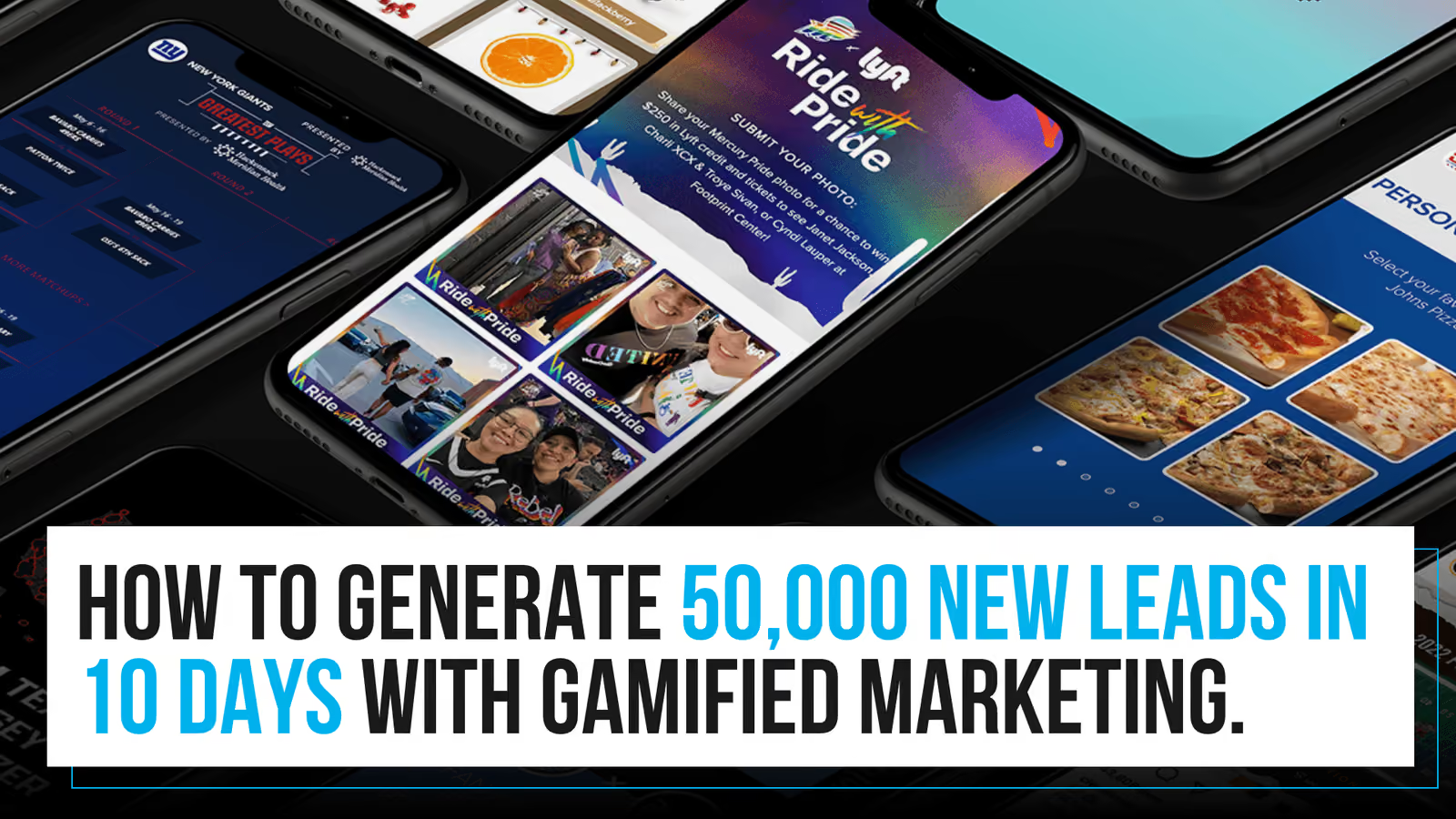
Most brands experiment with gamification as a one-off campaign. A quiz here. A sweepstakes there.
But the brands generating tens of thousands of leads with gamified marketing aren’t running random promotions. They follow a repeatable launch model designed to concentrate participation and scale quickly.
At WIT, that launch model is detailed in the 10-Day Gamification Framework.
Instead of running campaigns indefinitely, brands launch short, high-intensity interactive campaigns built around three phases: pre-launch, launch, and amplification. The goal isn’t just engagement - it’s rapid first-party data capture and repeatable customer acquisition.
Why the 10-Day model works
Most traditional promotions fail for a simple reason: they lack urgency.
A campaign that runs for months rarely generates momentum. Participation spreads thinly over time, making it harder to drive meaningful reach or capture data at scale.
Gamified campaigns perform differently when they are time-boxed.
A defined window creates urgency, increases sharing, and allows brands to concentrate their marketing spend and attention around a single activation. Instead of a slow trickle of leads, the campaign generates a surge of participation over a short period of time.
This is why many high-performing campaigns - including large sports activations and QSR promotions - are structured around intense bursts of activity rather than long-running promotions.
Phase 1: Pre-Launch (Days -5 to 0)
The success of a gamified campaign is often determined before it goes live.
In the pre-launch phase, brands prepare their distribution engine. This includes building the campaign experience itself - often a quiz, instant win game, bracket challenge, or prediction game - while preparing the audience channels that will drive participation.
Email audiences are warmed up. Social campaigns are scheduled. QR codes, landing pages, or in-store placements are prepared.
The goal is simple: ensure that when the campaign launches, the first wave of participants arrives immediately.
This early participation is critical because interactive campaigns become more powerful as they gain momentum.
Phase 2: Launch (Days 1-7)
The launch phase is where gamification does what traditional lead generation struggles to achieve: high engagement with low friction.
Instead of asking users to fill out a form before interacting, the experience begins with participation. Players engage with the game first, and data capture happens as part of the experience.
This approach taps into basic behavioral psychology. Humans are naturally wired to complete challenges, test knowledge, and compete for rewards.
When campaigns are structured correctly, this creates significantly higher completion rates than static lead-generation formats.
Across interactive campaigns powered by WIT, brands regularly see 3-5X more leads compared with traditional gated content or sweepstakes campaigns.
Phase 3: Amplification (Days 8-10)
The final phase focuses on scale.
Once a campaign has early participation and proven engagement, brands amplify distribution. Paid media budgets increase, social sharing is encouraged, and remarketing audiences are activated.
Because the campaign is already generating interaction, amplification becomes more efficient. Ads drive traffic to an experience that has already proven its appeal.
This is often the stage where campaigns achieve their largest participation spikes.
By the end of the window, brands have not only captured a large volume of leads but also gathered valuable first-party data about their audience - preferences, behaviors, and engagement patterns that can inform future campaigns.
What brands should look for in a gamification platform
Brands exploring gamified marketing often ask a simple question: what actually makes a gamification platform effective?
The most important factor is flexibility. Strong platforms allow brands to launch multiple types of interactive campaigns - including quizzes, instant win games, prediction contests, and bracket challenges - rather than relying on a single promotion format.
Lead capture is equally important. The platform should collect first-party data naturally as part of the experience, allowing brands to understand how audiences interact with campaigns and build usable marketing segments.
Distribution also matters. Campaigns should be easy to deploy across websites, mobile devices, email, paid media, and in-store channels using tools like QR codes.
Finally, speed is critical. The best gamification platforms allow marketing teams to launch campaigns quickly, making it possible to run short, high-impact activations like the 10-day campaign framework described above.
Platforms like WIT are built specifically for this type of interactive marketing, enabling brands to launch gamified campaigns that drive participation while capturing valuable audience data.
From campaigns to a repeatable growth engine
The most successful brands don’t run gamified campaigns once.
They run them consistently throughout the year - each campaign capturing new leads, revealing new audience insights, and expanding their first-party data.
Over time, this transforms gamification from a single promotion into a scalable acquisition channel.
Instead of relying on one sweepstakes or seasonal contest, brands deploy quizzes, instant win games, prediction challenges, and bracket competitions throughout the year - each campaign building a deeper understanding of their audience.
This is how gamified marketing moves beyond engagement and becomes a repeatable growth strategy.
The WIT 10-Day Gamification Framework is designed to make that process predictable - helping brands launch interactive campaigns that generate rapid participation, capture valuable data, and drive measurable customer acquisition.
This framework is the engine behind campaigns capable of generating 50,000+ leads in 10 days.
